Inter Board Abolition: Kavitha Challenges Revanth Reddy's Dropout Figures, Demands Public Consultation
 WhatsApp Channel
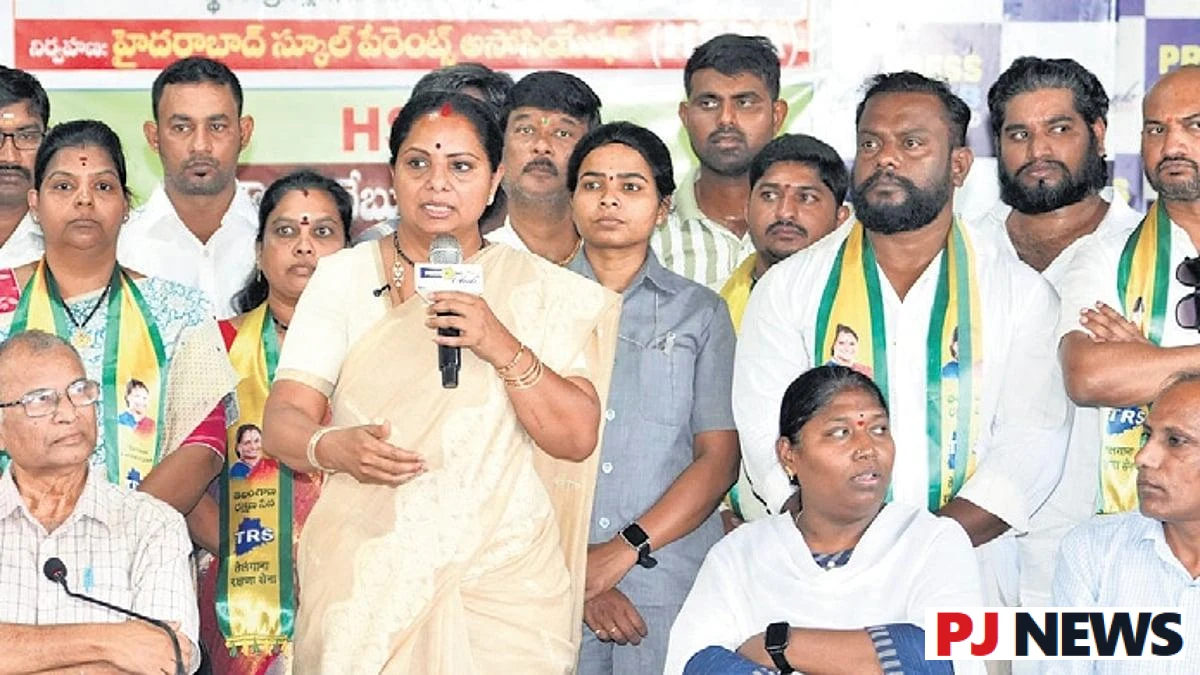
**The PJ Herald | Hyderabad:** Telangana Rakshana Sena (TRS) president Kalvakuntla Kavitha has strongly opposed any unilateral move by the Congress government to abolish the Telangana State Board of Intermediate Education and merge Intermediate education with the School Education Department. Addressing a round-table meeting at Somajiguda in Hyderabad on Tuesday, November 17, Kavitha demanded extensive consultations with educationists, teachers, students, parents and college managements before introducing changes that could affect thousands of students and employees.
The meeting, organised under the theme 'Abolition of Intermediate Board: Impact on Telangana Education', brought together education experts, intellectuals and representatives of teachers' organisations. Participants discussed the implications of restructuring the existing Intermediate education system, including academic standards, institutional infrastructure, staff service conditions and the transition of students from Class 10 to higher secondary education.
Kavitha questioned Chief Minister A. Revanth Reddy's reliance on student dropout figures to justify the proposed restructuring. She argued that the government's interpretation did not adequately account for students moving from government schools into private junior colleges or alternative educational courses.
Get important news and breaking updates directly.
According to figures cited by Kavitha during the meeting, the overall dropout rate was approximately 16 per cent. She further claimed that 77.4 per cent of girls transitioned from Class 10 to Intermediate education, compared with 68.4 per cent of boys. These statistics were presented by Kavitha as part of her criticism of the government's position and require comparison with the underlying official datasets.
The Telangana Rakshana Sena leader maintained that poverty, inadequate transport facilities in rural areas and difficulties faced by disadvantaged communities were among the major reasons students discontinued their studies. She urged the government to address these problems directly rather than treating the abolition of the Intermediate Board as a solution to student retention challenges.
Referring to Gujarat's Namo Lakshmi financial assistance programme, Kavitha suggested that Telangana examine similar measures to support students from economically vulnerable families. She argued that targeted financial assistance, improved public transport and stronger academic support could help more students continue their education.
The round-table discussion also raised concerns about the future of junior lecturers and other employees if Intermediate education were brought under the School Education Department. Representatives of teachers' organisations questioned how service rules, seniority, promotions and administrative responsibilities would be handled during such a transition.
Kavitha said changes of this magnitude required careful planning and should not be implemented in haste. She suggested that a comprehensive transition could take between three and ten years, citing the importance of studying other states' experiences and providing adequate financial, academic and administrative support.
She also warned against confusing administrative restructuring with improvements in educational quality. According to Kavitha, merely changing the department responsible for Intermediate education would not automatically resolve problems involving teaching standards, infrastructure or student performance.
While criticising the proposed approach, Kavitha clarified that she was not opposed in principle to every form of restructuring. Her objection was to proceeding without sufficient consultation, a clearly defined transition plan and safeguards for students and employees.
The discussion has placed fresh political attention on the government's education reform agenda. Supporters of administrative integration may view it as an opportunity to improve coordination between school and higher secondary education, while critics argue that the possible consequences for examinations, teaching staff and academic continuity must be examined first.
At the conclusion of the meeting, the central demand was for a transparent, evidence-based consultation process involving all affected groups. Kavitha warned that the Telangana Rakshana Sena would oppose an arbitrary decision to abolish the Board without addressing the concerns raised by the education community.
The November 17 meeting marks an escalation in the public debate over Intermediate education reform in Telangana. Whether the government revises its proposal or initiates broader consultations remains to be seen, but the controversy has brought student welfare, educational quality and administrative accountability to the forefront.
Get the latest stories and breaking news on WhatsApp.