Telangana Plans ₹18,000 Crore Infrastructure Push for Bharat Future City; AI, Electronics and Life Sciences Hubs Proposed
 WhatsApp Channel
Location: Hyderabad
**The PJ Herald | Hyderabad:** Telangana is preparing an estimated ₹18,000 crore investment in core infrastructure for its ambitious Bharat Future City project, a proposed integrated urban and industrial development intended to attract businesses in artificial intelligence, electronics, life sciences and other emerging sectors. Details reported on Tuesday, November 17, 2026, indicate that the project's master plan has been prepared, with Chief Minister A. Revanth Reddy expected to unveil it during the Invest Telangana Global Summit scheduled for December 7–9.
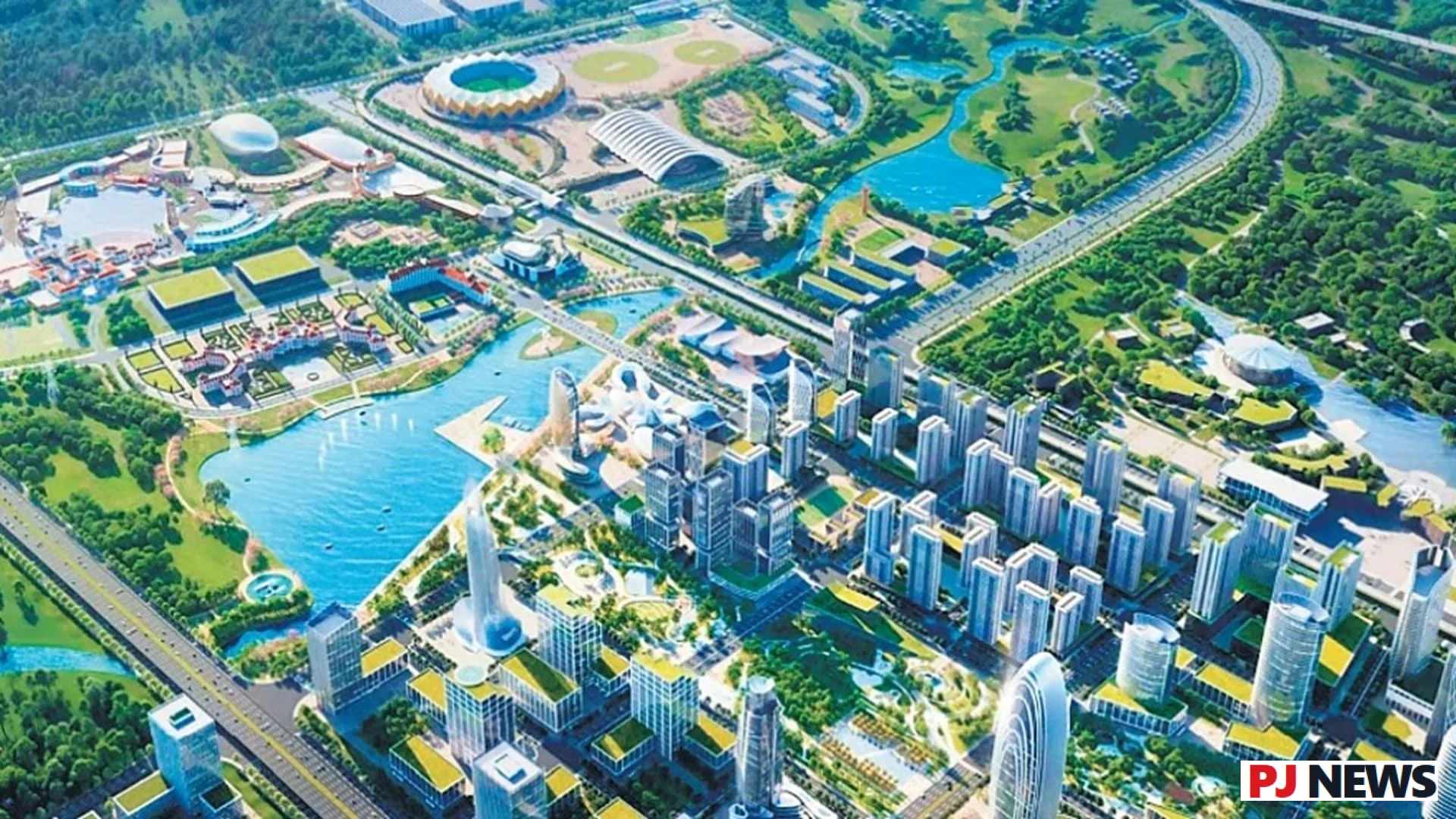
The development is central to the state government's effort to create a new investment destination beyond Hyderabad's established commercial and technology centres. Bharat Future City is envisioned as a planned urban hub combining industrial activity, residential neighbourhoods, educational institutions and public infrastructure, rather than functioning solely as a conventional industrial park.
Get important news and breaking updates directly.
Under the proposed development framework, approximately 30,000 acres form the core planning area. The master plan identifies 11 major sectors across about 13,440 acres, covering industries and services considered important for long-term economic growth. These include life sciences, electronics and advanced manufacturing, data centres, artificial intelligence, healthcare, entertainment, sports, education, housing, furniture manufacturing, electric vehicles and energy storage.
The allocation of land indicates the government's intention to create specialised industrial clusters. More than 4,000 acres have been earmarked for life sciences, while approximately 2,000 acres each are proposed for electronics and advanced manufacturing and for electric vehicle-related industries. Another 357 acres have been identified for data centres, reflecting the growing importance of digital infrastructure.
The estimated ₹18,000 crore infrastructure requirement includes substantial spending on transport, water management and electricity. Around ₹5,000 crore is proposed for road networks, approximately ₹6,000 crore for water supply and solid waste management, and about ₹2,350 crore for power infrastructure. These figures represent planned allocations rather than confirmation that the entire amount has already been sanctioned or spent.
Officials associated with the project have indicated that roughly ₹2,000 crore has already been spent on initial infrastructure works. The remaining investment will require further implementation, financing and coordination among state agencies. The final expenditure could vary as detailed engineering, procurement and construction progress.
Water supply is expected to be a critical component of the project, particularly because manufacturing facilities, residential areas and data centres can create significant demand. Planning details indicate a proposed supply of about 164 million litres per day, including approximately 40 million litres of recycled water. Rainwater harvesting, wastewater reuse and a zero-liquid-discharge approach are among the sustainability measures being considered.
Dedicated electricity substations are also proposed at Meerkhanpet to support the industrial and residential development. Reliable power will be particularly important for data centres and advanced manufacturing operations, which require continuous electricity supply and stable infrastructure.
The government has positioned Bharat Future City as a net-zero-oriented smart urban development based on the idea of integrating workplaces, homes, education and recreation. However, achieving environmental targets will depend on the actual design and operation of transport systems, buildings, water facilities and energy networks. The environmental performance of the completed project cannot yet be established.
An official associated with the Future City Metropolitan Authority has projected that the city could eventually accommodate around 15 lakh residents when fully developed. This is a long-term planning estimate, not a current population figure or a confirmed near-term migration forecast.
The proposed city also carries a significant land-use history. Part of the area was acquired during the previous Bharat Rashtra Samithi government's tenure for the Hyderabad Green Pharma City project. The present administration is pursuing a broader development model involving multiple industries and urban functions, making land utilisation and implementation arrangements important issues to monitor.
For investors, the project's appeal will depend on more than the availability of land. Companies considering new facilities typically examine transport connections, electricity reliability, water security, skilled labour, regulatory approvals and access to suppliers. The planned infrastructure expenditure is intended to address several of these requirements and improve the region's competitiveness.
The upcoming Invest Telangana Global Summit is expected to provide a platform for the government to present the master plan and engage with prospective domestic and international investors. The summit is scheduled to take place at Bharat Future City from December 7 to 9, with investment promotion linked to the state's broader Telangana Rising 2047 economic vision.
Nevertheless, a master plan and investment estimates do not automatically translate into completed projects or confirmed private-sector commitments. The next stages will involve securing financing, awarding contracts, obtaining necessary approvals and establishing credible construction schedules. Public disclosure of these milestones will be essential for assessing progress.
If implemented effectively, Bharat Future City could support employment, industrial diversification and demand for supporting businesses across the Hyderabad region. Its ultimate economic impact, however, will depend on the pace of infrastructure delivery and the extent to which companies establish operational facilities rather than merely expressing interest.
As Telangana prepares to showcase the development at its December investment summit, the ₹18,000 crore infrastructure plan marks an important statement of intent. The central challenge now is to convert the proposed smart-city framework into functioning roads, utilities, industrial clusters and communities capable of supporting sustainable economic growth.
Get the latest stories and breaking news on WhatsApp.