Telangana High Court Questions Selective Police Action in Hyderabad Oocyte Trafficking Case
 WhatsApp Channel
Location: Hyderabad
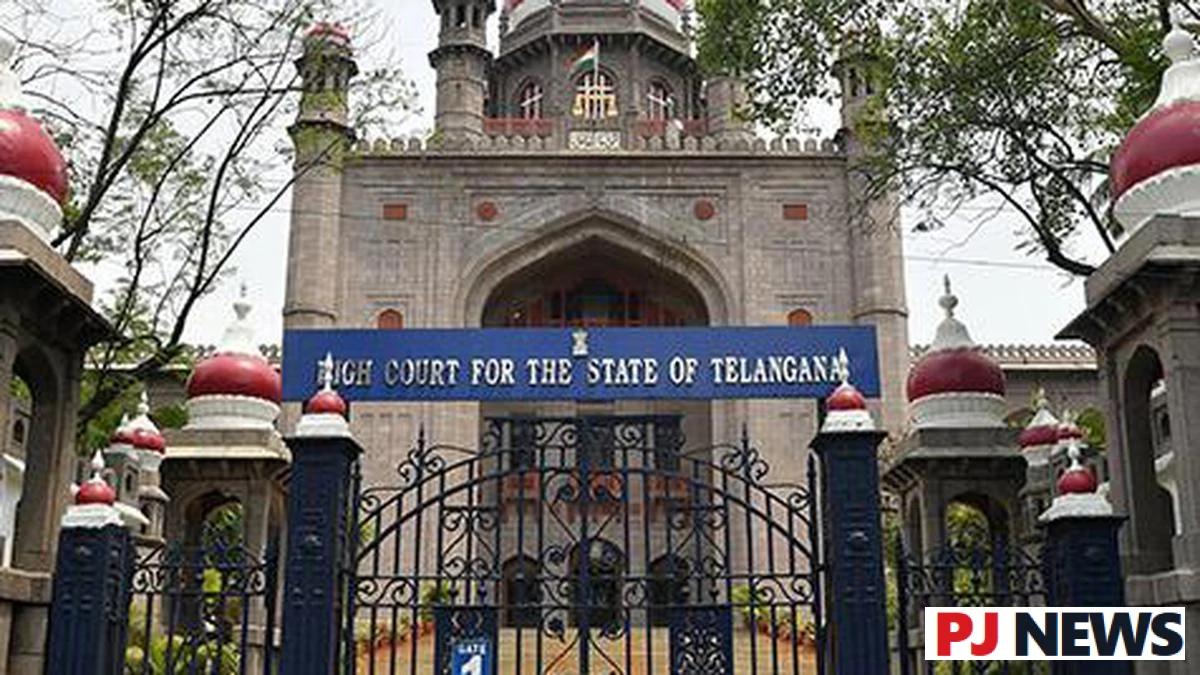
PJNews | Hyderabad : The Telangana High Court has questioned allegations of selective police action against doctors and fertility centres under investigation in the suspected illegal oocyte collection and trafficking case in Hyderabad.
During a hearing on Friday, November 20, Justice Narsing Rao Nandikonda also raised concerns about the possible exploitation of women subjected to hormone injections as part of egg collection procedures.
Get important news and breaking updates directly.
The observations came during the hearing of anticipatory bail petitions filed by Dr Padmaja Pala, Kovelamudi Hari Prasad, Dr Durga Gedela Rao and others seeking protection from arrest in cases registered at different police stations.
Counsel representing the petitioners alleged that the police had adopted inconsistent approaches towards individuals facing comparable allegations.
According to the petitioners, some doctors had received assurances that they would not be arrested, while others faced more aggressive enforcement measures.
The lawyers argued that such differences in treatment were arbitrary and raised questions about the fairness of the investigation.
The court questioned the apparent selective approach during the proceedings.
A separate concern related to the administration of hormone injections to women recruited as oocyte donors.
The judge orally questioned whether such practices could amount to exploitation, particularly where women might be vulnerable to financial pressure.
Hormonal stimulation can form part of medically supervised fertility treatment. Its use alone does not establish a criminal offence.
The relevant legal and medical questions include whether donors were eligible, whether their consent was informed and voluntary, whether required safeguards were followed and whether the procedures complied with the Assisted Reproductive Technology (Regulation) Act, 2021.
Counsel for the doctors argued that donor consent forms had been obtained in accordance with the law and denied violations of the applicable ART regulations.
The petitioners also disputed the authority of the police to investigate certain alleged regulatory breaches, arguing that responsibility for such matters rested with bodies constituted under the ART legislation.
These submissions remain contested legal arguments rather than findings accepted by the court.
The underlying police investigation concerns allegations that women were recruited through intermediaries for egg donation, with questions arising over recruitment methods, financial payments, medical procedures and donor documentation.
Investigators have examined the possible involvement of fertility centres, intermediaries and individuals who arranged donors.
The allegations have prompted broader scrutiny of the safeguards governing assisted reproductive technology services in Telangana.
During Friday's hearing, the police reportedly gave an oral assurance that no coercive action would be taken against the petitioning doctors and facilities.
Following that assurance, Justice Nandikonda reserved orders on the anticipatory bail matters.
The procedural distinction is important: reserving orders does not mean that anticipatory bail has been granted.
Nor does the reported oral assurance mean the underlying criminal cases have been dismissed or that the allegations have been adjudicated.
The case raises two parallel public-interest questions.
The first concerns the safety, dignity and informed consent of women involved in egg donation, including whether any were subjected to unlawful inducement or medical procedures outside prescribed safeguards.
The second concerns the obligation of investigators to apply the law fairly while respecting the rights of accused persons and the jurisdiction of specialised regulatory authorities.
A signed consent form is an important document, but it does not by itself settle every question about medical safety, donor eligibility or compliance with statutory requirements.
Equally, the registration of criminal cases or the filing of allegations does not establish guilt.
The next developments will depend on the High Court's written orders, the progress of the police investigation and any findings issued by the competent ART regulatory authorities.
PJNews will seek the authenticated court order, relevant FIR details, health department inspection findings and responses from the doctors and facilities concerned before reporting further conclusions.
Get the latest stories and breaking news on WhatsApp.