


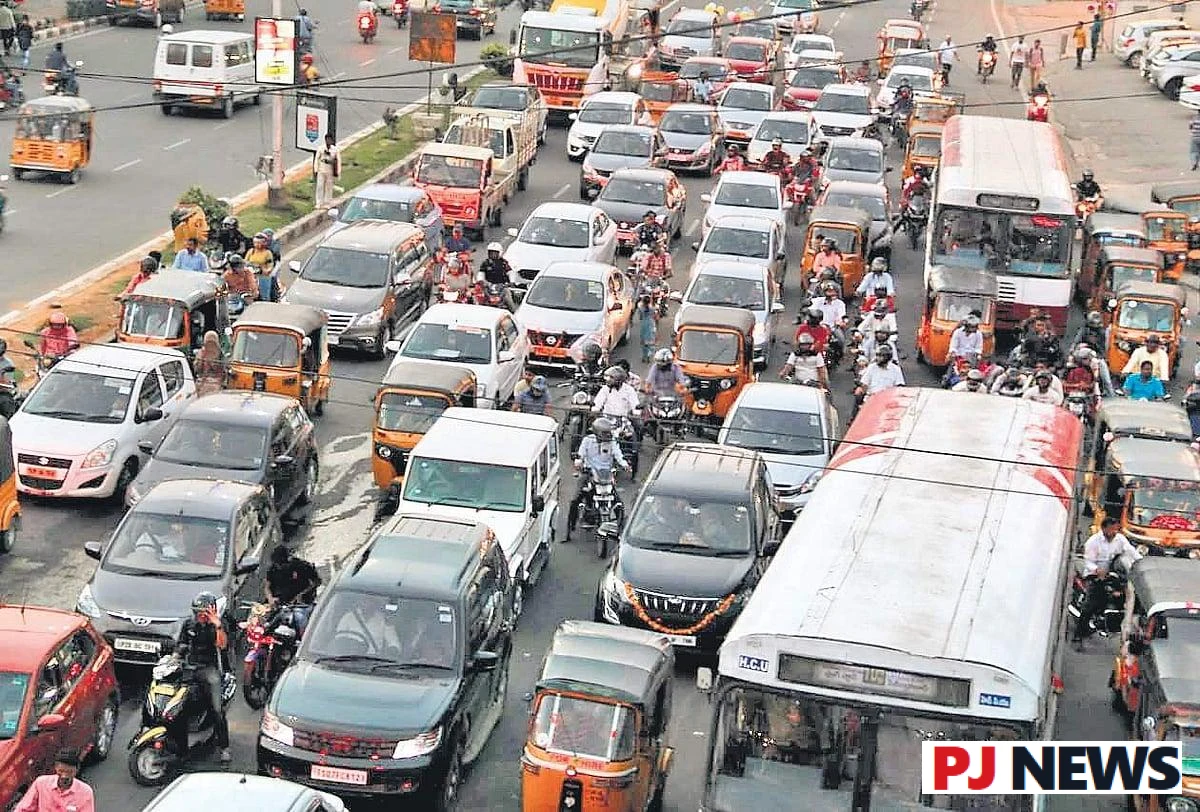
- GHMC approves ₹2.83 crore for project report to modernise traffic management across three municipal corporations
Hyderabad: In an effort to tackle increasing traffic congestion, civic authorities have initiated plans to introduce an Artificial Intelligence-powered Intelligent Traffic Management System covering 429 signalised junctions across Greater Hyderabad, Cyberabad and Malkajgiri municipal corporations.
The proposed system, known as CURE-ITMS, is intended to integrate traffic signals into a single technology-driven platform capable of responding to changing road conditions.
The Greater Hyderabad Municipal Corporation has assigned the preparation of a Detailed Project Report (DPR) to the Department of Electrical Engineering at University College of Engineering, Osmania University.
The GHMC Standing Committee has approved ₹2.83 crore for preparing the report. The university team has been given four weeks to complete the assignment.
Under the proposal, traffic signal timings could be adjusted dynamically according to vehicle movement, particularly during peak hours and heavy rainfall.
The system is also expected to improve emergency vehicle movement, identify accident-prone locations and support better road safety management.
Officials are examining the creation of an Integrated Traffic Data Platform to bring traffic-related information and signal operations under coordinated supervision.
The government has separately granted administrative approval of ₹77.31 crore for maintaining existing signals, upgrading older installations and providing 50 additional traffic signals and 15 pedestrian-operated Pelican signals.
The identification and installation of additional signals are planned for December 2026.
Authorities are also considering a dedicated institutional mechanism called Traffic Management and Road Safety, or TG-TMARS, to coordinate traffic and road safety initiatives.
Importantly, the AI-enabled network is still at the planning stage. The proposed technologies will first undergo pilot testing before wider implementation.
If successfully implemented, the project could reduce waiting times at major junctions, improve traffic flow and strengthen coordination between civic and traffic management agencies.
The actual rollout schedule and expected benefits will depend on the DPR, technical evaluation and subsequent implementation decisions.